September 17, 2026
OEM vs. ODM Kitchenware: What's the Difference?
Launching or expanding a kitchenware brand involves more than choosing the right products. One of the most important decisions you'll make is choosing the right manufacturing model. Two terms you'll encounter frequently are OEM (Original Equipment Manufacturer) and ODM (Original Design Manufacturer). Although they sound similar, they offer very different approaches to product development, customization, investment, and branding.
Launching or expanding a kitchenware brand involves more than choosing the right products. One of the most important decisions you'll make is choosing the right manufacturing model. Two terms you'll encounter frequently are OEM (Original Equipment Manufacturer) and ODM (Original Design Manufacturer). Although they sound similar, they offer very different approaches to product development, customization, investment, and branding.
Whether you're an importer, wholesaler, retailer, distributor, or private-label brand, understanding the difference between OEM and ODM manufacturing will help you choose the best solution for your business goals.
At Unitedpeople, we offer both OEM and ODM manufacturing services, giving customers the flexibility to develop products that match their budget, timeline, and market strategy.
What Is OEM Manufacturing?
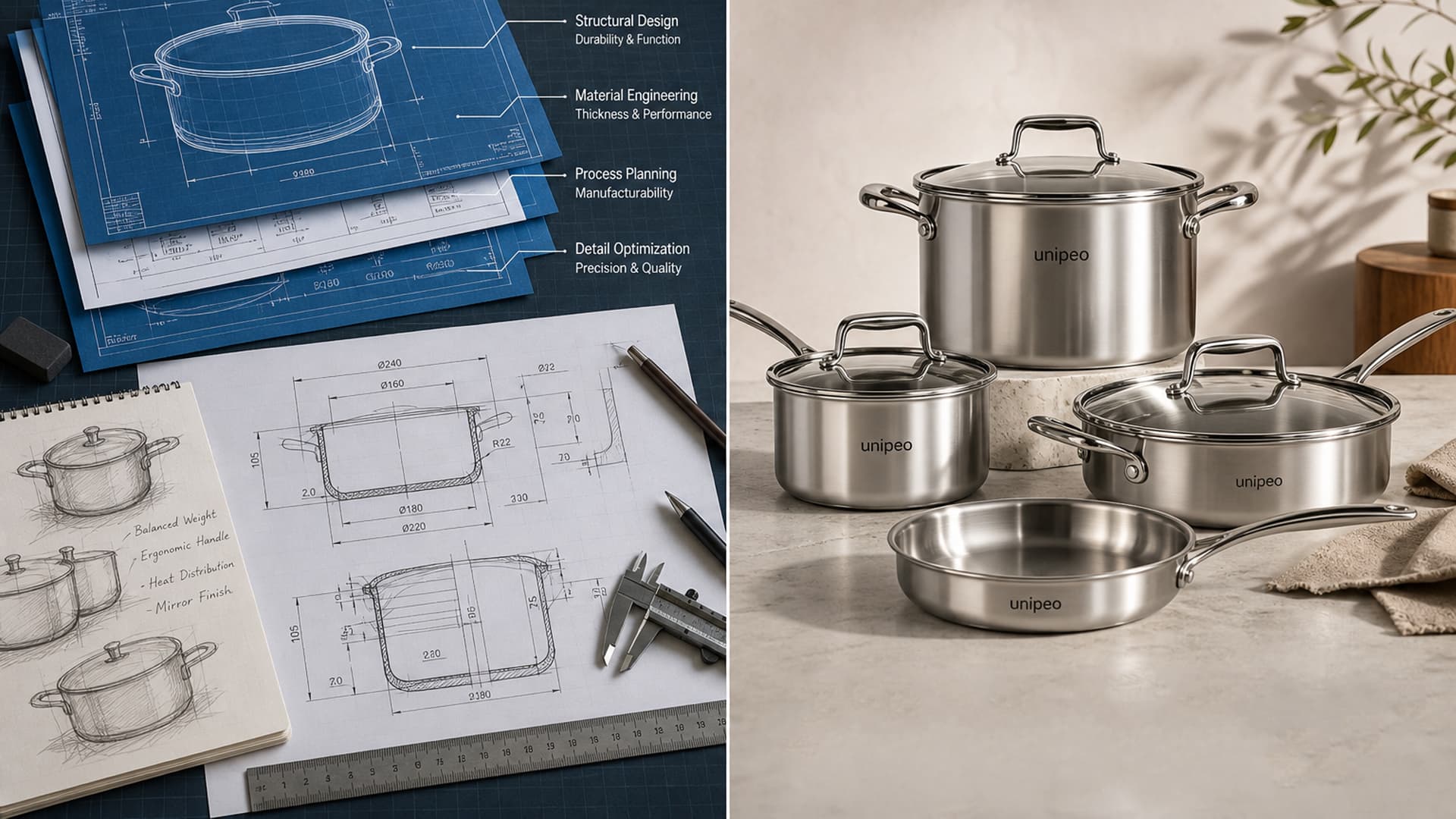
OEM stands for Original Equipment Manufacturer. In this model, the buyer provides the product concept, specifications, or design, while the manufacturer produces the product according to those requirements.
An OEM project gives buyers significant control over the finished product. Depending on the project, customers can customize nearly every aspect of the kitchenware, including:
- Product dimensions
- Materials and finishes
- Colors
- Product structure
- Branding and logos
- Retail packaging
- Labels and instruction manuals
For example, if your company wants to launch a unique stainless steel kitchen utensil set with exclusive handles, custom colors, and branded packaging, OEM manufacturing allows you to bring that vision to life.
The manufacturer focuses on engineering, production, quality control, and large-scale manufacturing, while your business owns the product concept and brand identity.
What Is ODM Manufacturing?
ODM stands for Original Design Manufacturer. Instead of creating a product from scratch, buyers select an existing product developed by the manufacturer and customize selected features before selling it under their own brand.
ODM products are already designed, tested, and production-ready, making them an attractive option for businesses that want to enter the market quickly.
Typical ODM customization includes:
- Company logo
- Product color
- Surface finish
- Packaging design
- Product combinations
- Branding elements
Because the base design already exists, buyers avoid many of the development costs associated with creating an entirely new product.
OEM vs. ODM: Understanding the Key Differences
Although both manufacturing models allow businesses to sell products under their own brand, they differ in several important ways.
Product Development
OEM starts with the buyer's idea. You provide detailed specifications or work with the manufacturer to develop a completely new product.
ODM starts with the manufacturer's existing design. Instead of designing a new product, you customize an existing one to match your branding.
If product uniqueness is your priority, OEM offers greater flexibility. If speed matters more, ODM is often the better choice.
Customization Level
OEM provides extensive customization opportunities.
Nearly every component can be modified, including product structure, dimensions, materials, finishes, handles, packaging, and branding.
ODM offers more limited customization because the underlying product design remains the manufacturer's intellectual property. Most modifications focus on appearance and branding rather than structural changes.
Development Time
Developing a completely new product naturally requires more planning.
OEM projects typically involve:
- Product discussions
- Engineering review
- Prototype development
- Sample approval
- Tooling preparation
- Production testing
Because of these additional stages, OEM generally has longer lead times.
ODM products already have established production processes, allowing businesses to begin production much faster.
For companies launching seasonal collections or responding to changing market trends, ODM can significantly reduce time to market.
Cost Considerations
Another difference between OEM and ODM is budget.
Typically OEM requires more up-front investment, as new products may require custom tooling, engineering, prototype and additional testing.
Conversely, ODM is often cheaper because manufacturers use existing molds, production lines and product designs. “Most of the money that buyers spend is spent on branding and packaging and not on product development.
ODM is often a less risky entry point for startups or companies exploring new markets.
OEM is often worth the extra investment for established brands looking for exclusive products .
Intellectual Property and Exclusivity
One of the primary differences between OEM and ODM is product ownership.
OEM manufacturing typically gives buyers more control over the product design they worked on, which makes it easier to create unique product lines to get ahead of competitors.
ODM manufacturing means the manufacturer has the original design of the product. You can customize the product to your brand, but other businesses may have access to similar designs unless exclusivity agreements are made.
OEM is most often chosen by companies working on the creation of a unique premium brand, as it offers a better product differentiation.
Why Work with Unitedpeople?
We understand that each customer has different sourcing requirements at Unitedpeople. “Some buyers want fully customized kitchenware that reflects their own brand personality, while others want reliable, market-ready products that are ready to launch quickly.
Therefore we provide OEM & ODM manufacturing service for a wide range of kitchenware categories including kitchen utensils, cutlery, bakeware, barware, flatware, kitchen gadgets and home accessories.
We have an experienced team who works closely with our customers in all stages of the production process , from product selection, material recommendation, branding, packaging, quality inspection and export preparation. We help businesses source quality kitchenware efficiently and with confidence. We do this through factory direct manufacturing, modern production capabilities and experience supporting customers in over 50 countries.
Final Thoughts
OEM vs. ODM – Which is the Right Manufacturing Model for Your Business Goals? Choosing between OEM vs. ODM is not a better or worse manufacturing model.
OEM offers the flexibility and control to create something unique if you want to build a distinct brand with exclusive products. If your aim is speed, lower development costs and a faster time to market, ODM provides an effective route to high-quality kitchenware under your own brand.
At Unitedpeople we assist you with manufacturing solutions that suit your growth strategy. Whether you are designing your first kitchenware line or adding to an existing product line, our team is here to help you turn your ideas into successful products in today’s competitive global marketplace.