November 25, 2026
How to Build a Private-Label Barware Collection for Hotels, Bars, and Retail Brands
By Kay Chan|12 min read
Start with the customer scenario, group products by function, and build a core assortment around shakers, mule mugs, or julep cups. Then confirm finishes, packaging, MOQ, samples, and product-specific compliance documents before you order.
Hotels, bars, restaurants, distributors, and retail brands usually need a coordinated barware range that covers preparation, serving, presentation, and packaging.
The right product mix depends on how the collection will be used and sold. A cocktail bar may need shakers, bar spoons, pourers, and garnish accessories. A hotel or resort may need drinkware and presentation pieces that match its service style. A retail brand may prioritize giftable sets, distinctive finishes, branded packaging, and manageable minimum order quantities.
Unitedpeople's Barware collection includes stainless steel drinkware, mule mugs, goblets, julep cups, cocktail tools, corkscrews, pourers, cocktail picks, and reusable straw sets. This guide explains how buyers can plan a coherent barware line before requesting samples or a quotation.
1. Start With the Customer and Service Scenario
The first decision is which customer and service scenario the collection must support.
Unitedpeople describes its target buyers as importers, distributors, retailers, hospitality businesses, and private-label brands. Its Industries We Serve page also identifies hotels and resorts, restaurants and cafés, catering and event companies, bars and beverage service businesses, and food-service distributors and wholesalers.
These customers buy barware for different reasons.
Buyer type | Primary collection objective | Useful product direction |
Hotels and resorts | Consistent service and presentation across bars, restaurants, and events | Coordinated drinkware, serving cups, and practical bar tools |
Cocktail bars | Speed, repeatable preparation, and a consistent back-bar setup | Shaker sets, bar spoons, pourers, and garnish accessories |
Restaurants and cafés | Compact, versatile products for beverage and table service | Drinkware, stirrers, openers, and selected accessories |
Catering and event companies | Transportable, durable, and easy-to-coordinate items | Stackable vessels, reusable accessories, and practical service tools |
Retail and e-commerce brands | A clear assortment with visual differentiation and retail-ready packaging | Giftable sets, distinctive finishes, and branded product presentation |
Distributors and wholesalers | A range that can serve several customer segments | Core products, complementary accessories, and multiple price positions |
Start with one primary buyer group. A hotel-bar collection and a gift-oriented retail line need different products. Defining the buyer first also makes it easier to decide which products deserve samples and which should remain future additions.
2. Build the Collection by Product Function
A barware collection is easier to manage when products are grouped by what they do rather than by appearance alone. A practical structure has four layers: preparation, pouring and opening, drinking and presentation, and accessories.
Preparation and mixing
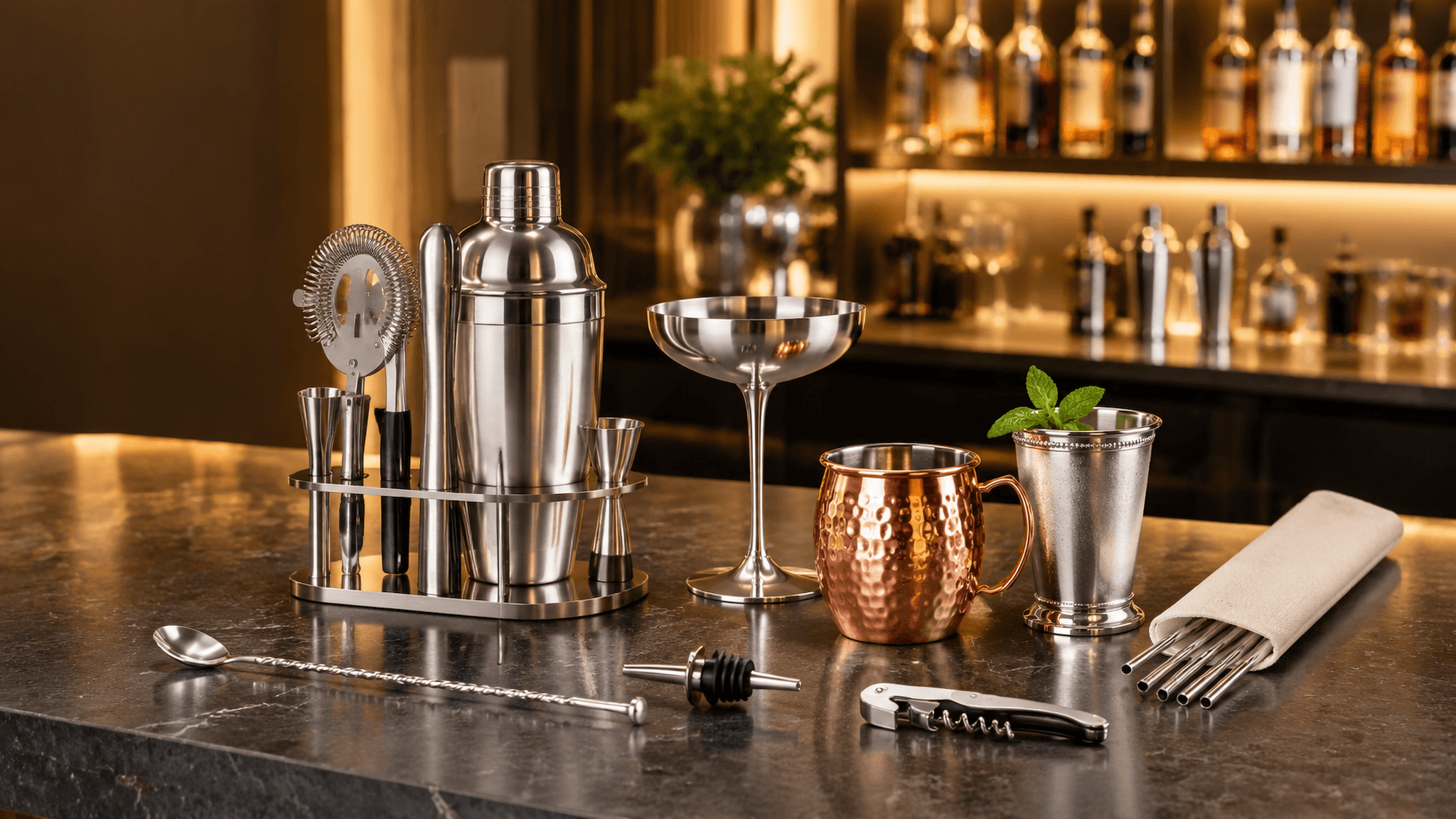
A complete cocktail station may require more than a shaker. Unitedpeople's Cocktail Shaker Set category describes a stainless steel bartender kit with a Boston shaker, Hawthorne and fine-mesh strainers, jigger, muddler, bar spoon, ice tongs, and an integrated stand.
This type of set can work as a core product for a retail gift line or as a coordinated starting point for a bar-supply assortment. The category page lists a current MOQ of 1,000 sets, so buyers should confirm whether the set quantity fits their launch plan before making it the center of a first order.
Stirring and pouring
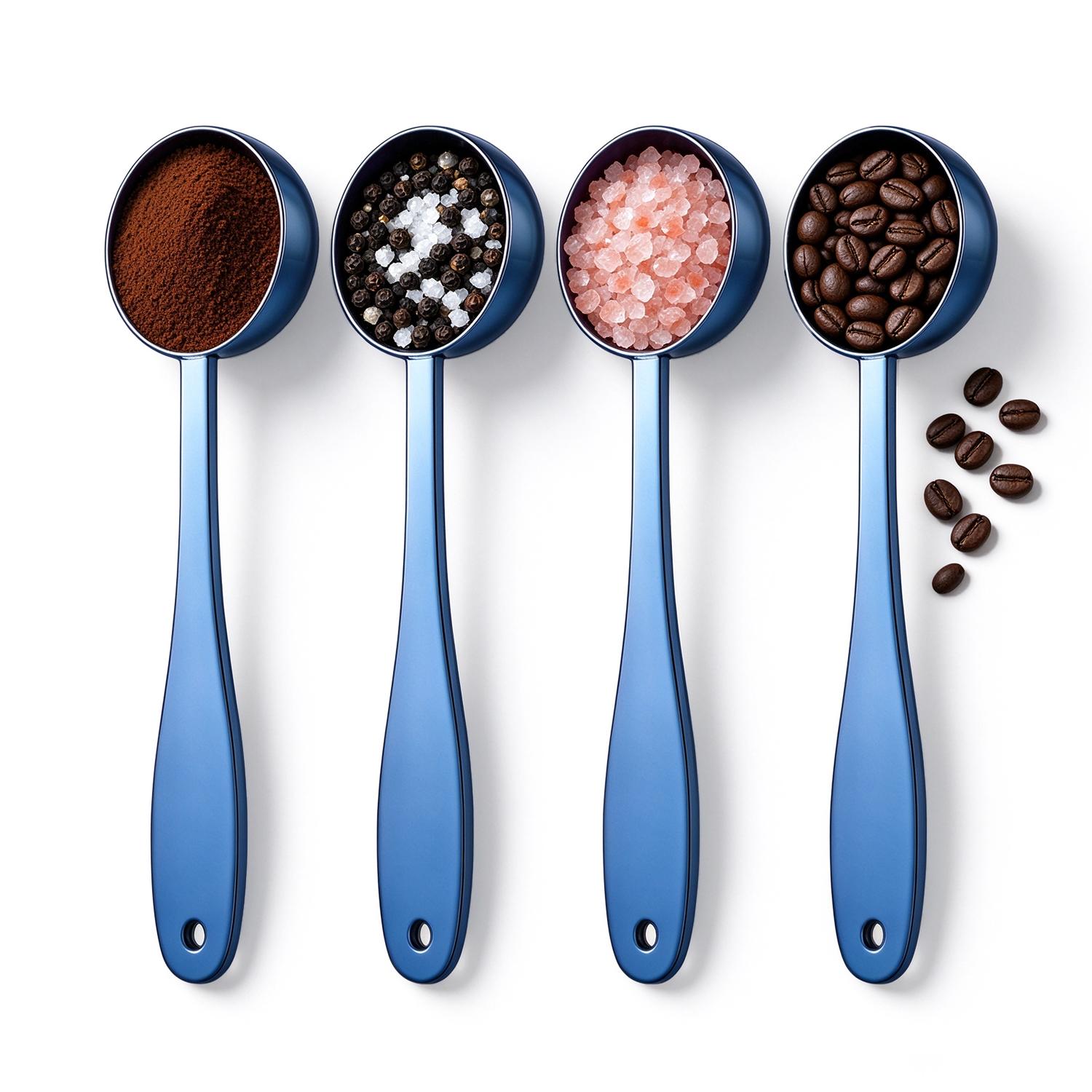
A 12-inch stainless steel bar spoon can serve as a complementary product for tall glasses, pitchers, and shaker tins. The product page describes a spiral stem and teardrop bowl, and lists a current MOQ of 50 pieces.
A stainless steel liquor pourer can be used as another add-on for bar-service collections. Its product page describes a tapered spout and multi-rib stopper, with a current MOQ of 100 pieces. Buyers should check the bottle-neck fit with a sample when their bottles use an unusual diameter.
Opening and beverage service
For wine and bottle service, the Corkscrews & Openers category includes wood-handle and all-steel waiter's corkscrews. The listed products include a foil cutter and beer bottle opener, and the category page lists a current MOQ of 500 pieces for each model shown.
This category may suit hospitality supply, distributor assortments, and retail gift programs. The choice between a wood handle and an all-steel design should follow the intended positioning of the collection rather than being made only on unit price.
Drinking and presentation
The drinkware part of the range establishes much of a barware collection's visual identity. Unitedpeople's Moscow Mule Mugs category includes silver, copper-plated, rose-gold, hammered, and stemless options. Listed models include a 500ml hammered 304 stainless steel mule mug, a 430ml rose-gold plated 304 stainless steel mule mug, and a stemless wine cup.
For a different serve, Mint Julep Cups are available in mirror-polished stainless steel models. The category page lists a 400ml model and a 12oz model, each with a current MOQ of 200 pieces.
Accessories and differentiation
Small accessories can help a collection feel more complete without requiring a new vessel design. The Drinkware Accessories category includes reusable stainless steel straw sets with a cleaning brush and pouch. The current category page lists a MOQ of 50 pieces for the shown set.
For event-led or promotional collections, stainless steel cocktail picks can add a theme or visual detail. The current product is football-themed and lists a MOQ of 1,000 pieces, so the design is better suited to a defined promotion, sports-bar program, or branded campaign than to every general-purpose assortment.
3. Choose a Core-and-Complementary Assortment
A core-and-complementary assortment is easier to explain, sample, and replenish than launching every barware category at once.
Core products
Choose one or two products that express the collection's main use case. Examples include:
- A cocktail shaker set for a bartender-focused or giftable collection
- A mule mug or goblet for a drinkware-led range
- A julep cup for a focused cocktail presentation line
- A bar spoon and pourer combination for a practical bar-tool range
Complementary products
Add products that support the core item or improve the order's commercial usefulness:
- A spoon or pourer alongside a drinkware program
- A corkscrew alongside wine-oriented products
- Cocktail picks or reusable straws as accessory items
- Branded packaging for products intended for retail shelves or gifting
Future expansion products
Keep some products for a second stage. This is useful when the first order is intended to test a market, a finish, or a new brand position. A staged range can reduce the risk of ordering unrelated products before the buyer has evidence of demand.
The product choice should also reflect the current MOQ. For example, the pages reviewed for this article list 50 pieces for the bar spoon, 100 pieces for the liquor pourer, 200 pieces for several mugs and julep cups, and 1,000 sets for the cocktail shaker set. These figures are product-page references, not a universal MOQ policy; confirm the current quantity, customization requirements, and packaging conditions in the quotation.
4. Compare Materials, Finishes, and Product Positioning
Material and finish affect the collection's price position, care instructions, packaging message, and suitability for a particular customer.
Unitedpeople's Barware page describes stainless steel as the standard material for its vessels, while individual pages identify different models and finishes. The Moscow Mule Mugs page explains that copper and rose-gold versions are plated over a stainless steel body rather than made from solid copper. This distinction should be stated clearly in product descriptions and retail packaging.
When comparing options, review:
- Confirm the material and grade for the exact product model.
- Compare polished, brushed, hammered, copper-plated, rose-gold, or other available finishes.
- Check whether a finish requires hand washing or special handling.
- Check whether vessels and tools share a coherent finish language.
- Decide whether the range is practical, premium, promotional, giftable, or hospitality-focused.
For example, a hospitality buyer may prioritize service durability and replenishment, while a retail brand may place more weight on a distinctive finish, presentation box, and shelf appeal. The right choice depends on the intended customer and channel.
5. Plan Private-Label Branding and Packaging Early
Discuss private-label work before the collection is finalized. Logo placement, packaging, labels, set composition, and artwork can affect feasibility, cost, samples, and order quantities.
Useful questions include:
- Which products can carry a logo, engraving, printing, or another marking method?
- Will the logo appear on the product, the packaging, or both?
- Does the buyer need individual retail boxes, a gift set, or bulk export packaging?
- Can several products use the same visual identity and packaging system?
- Is a new mold, stamping tool, or structural change required?
- Which artwork, barcode, label, and instruction requirements apply in the destination market?
For the difference between selecting an existing product and developing a more customized design, see OEM vs. ODM Kitchenware: What's the Difference?. In general, an ODM-style project may begin with an existing product and focus on selected branding or appearance changes, while an OEM project may require more extensive product specifications, development, tooling, and sample approval.
Unitedpeople's certifications and compliance page also states that OEM and ODM projects can involve product design, material selection, logo customization, packaging, certifications, and documentation support. The available documents and requirements still need to be confirmed for the specific product and destination market.
6. Confirm Compliance and Quality Documentation by Product
A barware collection may contain several product types, materials, coatings, and intended uses. Do not assume that one certificate or test report applies identically to every item in the range.
Before placing a bulk order, ask for the documents relevant to the selected products and destination market. Unitedpeople's compliance page identifies ISO 9001:2015 quality-management certification, FDA food-contact testing for specific stainless steel products, EU food-contact documentation under Regulation (EC) 1935/2004, selected LFGB testing, REACH declarations, and BSCI audit information. The page also states that product-specific reports and certificates should be requested for the relevant models.
A buyer's pre-production checklist should include:
- Material and grade confirmation for each selected model
- Finish and coating description where applicable
- Food-contact or market-specific documents required for the product
- Packaging and labeling requirements
- Sample approval records
- Inspection criteria for appearance, function, finish, and packaging
- Confirmation of which documents will be supplied with the order
For more detailed supplier-process guidance, see How to Evaluate Kitchenware OEM Supplier Performance for Long-Term Supply. That article explains why repeat-order quality, inspection evidence, corrective actions, and documentation should be evaluated after the initial order as well as before it.
7. Use Samples to Test the Collection as a System
A single product sample can look suitable while the full assortment feels inconsistent. Review the proposed products together before approving production.
Check the following:
Visual consistency
Place the vessels, tools, and accessories side by side. Look at the relationship between polished and hammered surfaces, silver and colored finishes, handle shapes, logo placement, and packaging colors.
Functional fit
Consider whether the products support the same service environment. A cocktail shaker, bar spoon, pourer, and garnish pick should make sense as a working set, not just as separate catalog items.
Handling and care
Review rim finishing, handles, balance, moving parts, sharp points, cleaning instructions, and storage requirements. Products with plated or decorative finishes may require different care from uncoated stainless steel items.
Packaging and presentation
Test how the products look in the proposed box, pouch, carton, or retail display. Packaging should protect the product and communicate the intended market position without making unsupported performance claims.
Reorder logic
Ask whether each item can be replenished later with the same specification, finish, packaging, and branding. A collection that is attractive at launch but difficult to repeat can create avoidable problems for retailers and hospitality buyers.
8. Build the Internal-Link and Conversion Path Around the Collection
The internal links on a barware article should carry readers from information to product evaluation and then to a next step.
Discovery
Link to the Barware collection when explaining the full range.
Product comparison
Link to focused categories such as Cocktail Shaker Sets, Moscow Mule Mugs, Mint Julep Cups, Bar Spoons, and Liquor Pourers.
Trust and documentation
Link to Certifications & Compliance when discussing food-contact documents, quality systems, and destination-market requirements.
Commercial next step
Link to Request a Quote after the reader has enough information to describe a product mix, quantity, finish, packaging, and destination market.
The internal-link path is:
Barware sourcing question
↓
Barware collection guide
↓
Category and product pages
↓
Compliance and OEM/ODM information
↓
Request a quotation
Each link should answer the next question a buyer is likely to have.
Frequently Asked Questions
What should a private-label barware collection include?
Start with products that match the intended customer and service scenario. A collection may include mixing tools, bar spoons, pourers, openers, drinkware, presentation vessels, and accessories. The final assortment should be based on the buyer's channel, service requirements, finish strategy, packaging plan, and confirmed MOQ.
Should a new retail brand start with a complete barware range?
Not necessarily. A focused core assortment with complementary products is often easier to sample, explain, package, and replenish. Additional categories can be added after the brand has evaluated market response and repeat-order potential.
Can barware products be customized with a company logo?
Customization options depend on the product, marking method, artwork, packaging, and order requirements. Discuss logo placement, packaging, set configuration, and any tooling needs before production. Unitedpeople provides OEM and ODM support, but product-specific options should be confirmed in the quotation.
How should buyers compare stainless steel and plated barware?
Confirm the base material, grade, surface finish, care requirements, and product-specific documentation. A plated copper or rose-gold finish should not be described as solid copper if the product uses a plated stainless steel body. The product page and final quotation should use the same specification.
What documents should buyers request before ordering?
Ask for the documents that apply to the selected products and destination market. Depending on the item, this may include material information, food-contact testing, quality-system information, packaging details, and other market-specific documentation. The compliance page states that available reports and certificates should be checked for the specific models in the order.
How can I request a private-label barware quotation?
Prepare the product categories or product links, estimated quantity, preferred finish, logo or packaging requirements, destination country, and target timing. Then contact Unitedpeople for a quotation. The team can confirm current MOQ, samples, customization feasibility, documentation, and shipping options for the proposed collection.
Final Thoughts
Build a private-label barware collection as a coordinated commercial range. Start with the customer scenario, group products by function, select a core assortment, and add complementary tools or accessories that make the range easier to use and sell.
Before production, confirm the exact material, finish, care requirements, packaging, MOQ, sample approval process, and product-specific compliance documents. Review the collection as a system so that the visual language, service function, and reorder plan work together.
To explore available products, visit the Unitedpeople Barware collection. For OEM, ODM, private-label packaging, documentation, and quotation requirements, send your project details to the Unitedpeople team.
Share this article
Help others discover this insight.
Related Reading
View all articles
Nov 7, 2026
How to Evaluate Kitchenware OEM Supplier Performance for Long-Term Supply
Kitchenware supplier performance evaluation after the first order: repeat-order quality, OTIF delivery, corrective actions, compliance, and supply stability.
Read more
Oct 22, 2026
How Integrated OEM Manufacturing Supports Kitchenware Sourcing
Why kitchenware buyers should evaluate the whole sourcing workflow, not unit price: development, quality, compliance and export in one OEM partner.
Read more
Nov 17, 2026
Stainless Steel Cutlery Quality: What Buyers Should Look for Before Purchasing
The type of steel, thickness, weight and finish can all make a difference, especially when the cutlery is used regularly.
Read moreRelated Products
View all products