July 31, 2026
How to Source Kitchenware from China: 2026 Importer's Guide
By Kay Chan|11 min read
Work directly with Yangjiang manufacturers — the cluster behind 75% of China's cutlery output — to cut sourcing costs 15–30% and lead time by 2–3 weeks. Full guide with MOQ, QC and certification steps.
The most reliable way to source kitchenware from China is to work directly with specialized manufacturers in Guangdong's Yangjiang cluster — China's dominant hardware, cutlery and kitchen tool production hub — rather than going through multi-layer trading companies. This cuts costs by 15–30%, gives you quality control leverage, and typically reduces lead time by 2–3 weeks.
Why Yangjiang Matters for Kitchenware Sourcing
Yangjiang, a prefecture-level city in western Guangdong, is known as “China's Capital of Knives and Scissors.” The city accounts for 75% of China's total knives and scissors output and 85% of national exports in this category, with an industry chain exceeding RMB 55 billion (approx. USD 7.86 billion) in scale.
Yangjiang kitchenware cluster: key figures
- Registered market entities in the hardware & cutlery sector: 8,500+
- Share of China's knives & scissors output: approximately 75%
- Share of China's knives & scissors exports: approximately 85%
- Total industry chain scale: RMB 55+ billion (USD 7.86 billion)
- Industry workforce: approximately 200,000 people
- Typical MOQ for custom orders: 500–3,000 units
- Export certifications commonly available: FDA, LFGB, SGS, BSCI, ISO 9001
Source: China Daily, October 2025 and People's Daily Online, January 2025
This concentration means you can visit 5–8 factories in one trip, compare pricing on-site, and negotiate directly — something no online platform can replicate.
Step-by-Step Sourcing Process
Step 1: Define Your Product Specs Before Contacting Factories
The most common mistake importers make is sending vague RFQs like “I need kitchen gadgets.” Factories receive dozens of such inquiries daily and ignore them. Instead, prepare a one-page spec sheet covering:
- Material: 304 stainless steel? 201? Silicone? Nylon? Pakka wood? Teak?
- Finish: Mirror polish? Brushed? Matte? Color coating?
- Dimensions: Exact measurements in mm, including thickness
- Packaging: Individual box? Hang tag? Bulk pack?
- Target price range: FOB Yangjiang per unit
- Target certifications: FDA (US market), LFGB (EU), or both
Step 2: Identify the Right Type of Supplier
Not all Yangjiang factories are the same. There are four supplier types, and choosing the wrong one is the fastest way to blow your budget or your timeline.
OEM factory — Best for custom designs and private label programs. Expect a MOQ of 1,000–3,000 units and the highest price level of the four, because you are paying for tooling, engineering time, and exclusivity.
ODM factory — Best when you can work from existing molds with minor customization. MOQ typically runs 500–2,000 units at a medium price level. This is the sweet spot for most first-time importers who want a branded product without funding new tooling.
Specialized workshop — Best when you need a single material or a single category only. MOQ can drop as low as 300–1,000 units at the lowest price level, but you give up multi-category consolidation and often have weaker export documentation support.
Integrated manufacturer — Best for multi-category orders. MOQ sits around 500–2,000 units at a competitive price level, and the real advantage is consolidation rather than unit price.
If you're building a kitchenware brand, an integrated manufacturer like Unipeo (Yangjiang Unitedpeople Plastic & Hardware Co., Ltd.) can consolidate cutlery, bakeware, barware, coffee accessories and kitchen gadgets into a single shipment — saving 20–30% on logistics compared to splitting orders across multiple factories.
Step 3: Verify the Factory Before Placing an Order
Three non-negotiable checks:
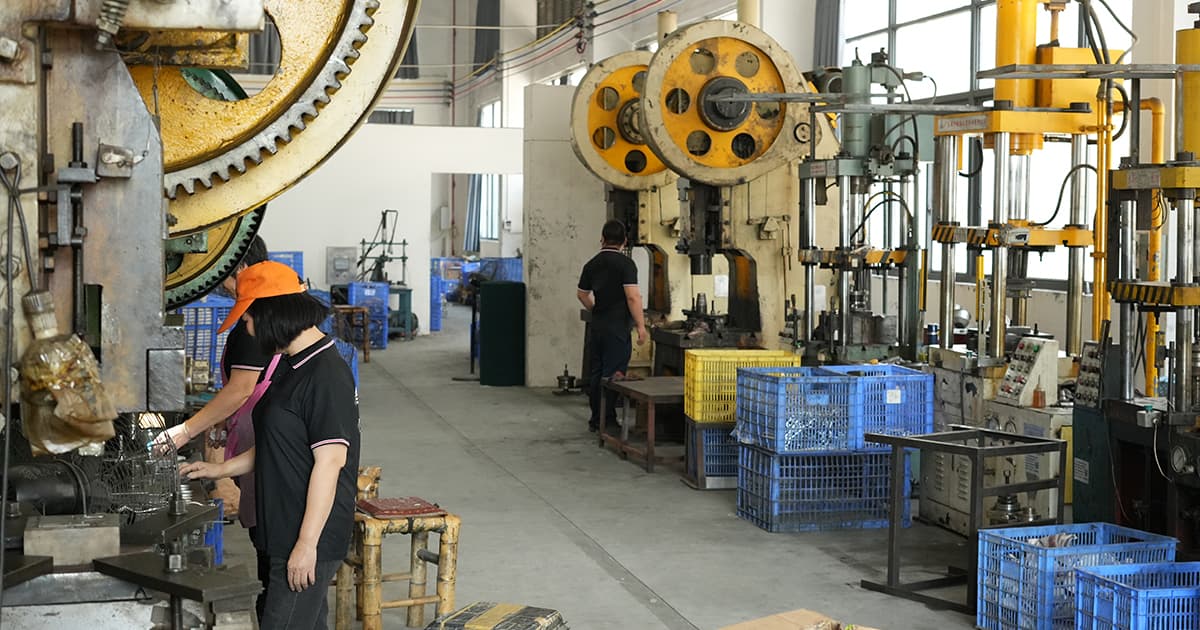
- Video call with factory floor: Ask them to walk the camera through the production line. Look for organized workstations, visible QC stations, and the actual machines — not just the showroom.
- Request 3 recent export documents: Bill of lading, packing list, and certificate of origin from shipments in the last 6 months. A legitimate factory will provide these within 24 hours.
- Third-party audit: For orders above $10,000, commission an SGS, TÜV, or Bureau Veritas factory audit ($500–800). It costs less than a bad shipment.
Step 4: Negotiate Smart — Not Just on Price
Factory pricing in Yangjiang is already competitive, so hammering the unit price is usually the least productive lever. These five negotiation points deliver more:
Payment terms — Push for 30% deposit and 70% against B/L copy. This does not lower your cost, but it frees up cash flow for a full production cycle.
Mold cost sharing — Most factories will absorb tooling cost entirely if your order exceeds 5,000 units. This saves $500–2,000 in upfront tooling per SKU.
Packaging optimization — Switching from retail boxes to bulk packing cuts unit cost by 8–15%. Only relevant if you are repacking domestically or selling B2B.
Consolidated shipping — Combining SKUs into a single FCL rather than multiple LCL shipments reduces freight by 20–30%.
Annual volume commitment — Locking price for 12 months protects you against raw material fluctuation, which matters for stainless steel where nickel pricing swings hard.
Step 5: Quality Control That Actually Works
The factory's own QC report is not enough. Implement a three-layer system:
- Pre-production sample (PPS): Approve a golden sample before mass production starts. This sets the standard.
- During-production inspection (DPI): At 30–50% completion, inspect a random sample. Catch issues early.
- Pre-shipment inspection (PSI): AQL 2.5 Level II sampling per ISO 2859-1 on the finished goods. If your order is under 5,000 units, spend the $300–400 for a third-party inspection — it pays for itself the first time it catches a defect.
Beyond Kitchenware: Barware and Coffee Accessories from the Same Cluster
Most importers think of Yangjiang purely for knives and cookware, but the same manufacturing base produces two adjacent categories with strong margins:
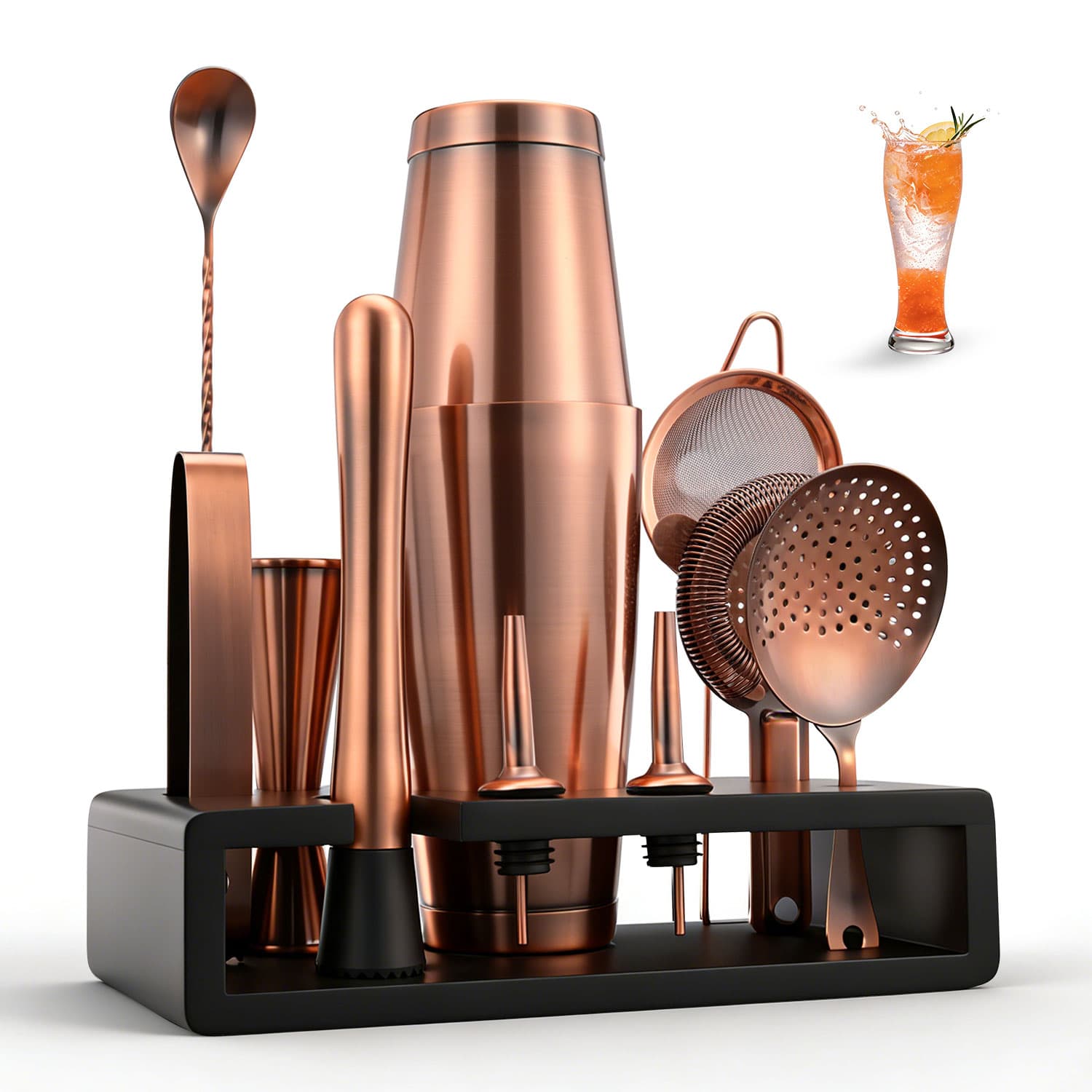
Barware: Cocktail shakers, jiggers, strainers, bar spoons, muddlers, and complete bartender kits. Yangjiang's stainless steel expertise transfers directly — a factory producing 304-grade chef knives runs the same material sourcing and polishing lines for shakers. Typical MOQ: 500–1,000 sets.
Coffee accessories: Pour-over kettles, tampers, distributors, milk frothing pitchers, and knock boxes. This is a fast-growing B2B category, especially for hotel and cafe chain buyers who want unified branding across their beverage program.
Sourcing all three categories from one integrated manufacturer means one MOQ negotiation, one QC standard, one shipment — instead of three separate supply chains.
FAQ: Common Questions from First-Time Kitchenware Importers
How much does it cost to ship kitchenware from China?
FCL (full container load) from Yangjiang to US West Coast runs $2,500–4,000 for a 20ft container and $3,500–5,500 for a 40ft container, depending on season. LCL (less than container load) costs roughly $120–180 per cubic meter. Always get quotes from 2–3 forwarders — the spread can be 15–25%.
What MOQ should I expect?
For custom OEM orders: 1,000–3,000 units per SKU. For stock products with minor customization (logo engraving, color change): 500–1,500 units. For ready-stock items: 100–500 units. Negotiate MOQ based on total order value, not per-SKU units — a factory is more likely to accept lower per-SKU MOQ if your total order exceeds $5,000.
How long does production take?
Lead time depends entirely on how much customization you require:
Stock products with no customization: 15–25 days
Stock products with logo or branding added: 25–35 days
Custom OEM requiring new molds: 35–50 days
Large volume orders of 10,000+ units: 45–60 days
On top of production, add 18–25 days for sea freight to the US or Europe, plus 3–5 days for customs clearance. A realistic door-to-door estimate for a custom OEM order is therefore 60–80 days from deposit to warehouse.
What certifications do I need?
- US market: FDA food contact compliance, California Proposition 65
- EU market: LFGB (Germany), DGCCRF (France), EU Regulation 1935/2004 framework regulation
- General quality: ISO 9001 (factory management), BSCI or SMETA (social compliance)
Most established Yangjiang manufacturers hold FDA and LFGB by default. Always request current certificates — they typically expire every 1–3 years.
What payment methods are safest when sourcing from China?
T/T (telegraphic transfer) with 30/70 or 50/50 split is the industry standard and works for most orders. L/C (letter of credit) adds bank-level protection for orders above $50,000 but costs 0.5–1.5% in fees and adds paperwork. Trade Assurance on B2B platforms offers escrow-style protection for smaller first orders. Avoid Western Union, personal accounts, or any request to pay an individual rather than the company entity — the company name on the invoice must match the bank account holder.
Do I need a sourcing agent, or can I work with factories directly?
Work directly if you have clear specs, can communicate in English with the factory's export team (most Yangjiang exporters have one), and your order exceeds $10,000. Hire an agent ($200–300/day or 3–5% commission) if it's your first order, you need on-the-ground factory visits, or you're sourcing across multiple categories and need consolidation. Direct sourcing saves the commission but costs you time — budget 20–30 hours for your first order cycle.
How do I avoid the most common sourcing mistakes?
- Don't choose the cheapest quote. The lowest price almost always means lower-grade stainless steel (201 instead of 304) or skipped QC steps.
- Don't pay 100% upfront. Standard terms are 30/70 or 50/50. Any factory demanding 100% prepayment is a red flag.
- Don't skip the factory visit. A showroom in a trade fair booth is not the same as a working production floor. If you can't visit, hire a local sourcing agent.
- Don't assume “stainless steel” means 304. Specify the exact grade in your contract. 201 stainless is 40–50% cheaper but rusts over time. Test incoming shipments with a handheld XRF analyzer, or use a simple magnet test as a first-pass screen.
Can I mix different kitchenware categories in one order?
Yes — if you work with an integrated manufacturer. Separate factories for cutlery, bakeware, barware and gadgets mean three or four MOQs, multiple shipments, and multiplied logistics headaches. Manufacturers like Unipeo that cover multiple categories under one roof can combine items into a single container, reducing complexity and per-unit freight cost.
Is Yangjiang the only option for Chinese kitchenware?
Yangjiang dominates knives, scissors and stainless steel kitchen tools, but three other clusters are worth knowing:
- Yangjiang, Guangdong — Knives, scissors, cutlery, cookware, bakeware, kitchen tools, and barware. The broadest category coverage of any Chinese cluster.
- Yongkang, Zhejiang — Stainless steel cups, thermoses, pots and pans. Strongest for drinkware and insulated products.
- Jieyang, Guangdong — Stainless steel tableware and lower-cost cutlery. Competitive on price, narrower on customization.
- Chaozhou, Guangdong — Ceramic dinnerware and porcelain. The go-to cluster for anything non-metal.
For a comprehensive kitchenware line, Yangjiang plus Chaozhou covers roughly 80% of what most importers need.
How do I protect my design from being copied?
- Register the right patent type before sharing your design. A design patent protects the product's appearance and typically grants in 6–12 months. A utility model patent protects structural or technical innovation on a similar timeline — CNIPA's average utility model examination cycle was 6.2 months in 2024. Note that utility model grant rates have tightened considerably since 2023, so budget for the possibility of rejection and file early. See CNIPA for current filing procedures.
- Sign an NNN agreement (Non-use, Non-disclosure, Non-circumvention) — drafted under Chinese law and enforceable in Chinese courts. A standard Western NDA is generally not enforceable in China.
- Split production across 2–3 components at different factories, and do final assembly separately.
- Build a relationship. Factories are far less likely to undermine a repeat customer generating $50K+ in annual volume.
Summary: Your 4-Week Kitchenware Sourcing Timeline
Week 1 — Finalize your product specs, shortlist 5–8 Yangjiang manufacturers, and send RFQs. Expect roughly half to respond within 48 hours; the ones that ignore a detailed spec sheet are self-selecting out.
Week 2 — Review incoming quotes, conduct video calls with the top 3–4 candidates, and request physical samples. Pay the sample fee without arguing; it is the cheapest due diligence you will ever buy.
Week 3 — Evaluate the samples against your spec sheet, negotiate terms using the five levers above, and commission a third-party factory audit on your final choice.
Week 4 — Place your deposit, approve the pre-production sample, and confirm the production schedule in writing with a penalty clause for late delivery.
Whether you're sourcing a single cutlery line or building a full kitchen, bar and coffee program, the fundamentals stay the same: precise specs, verified factories, layered QC, and a supplier relationship you can build on. Unipeo works with importers across all three categories from the Yangjiang cluster.
Sources
1. China Daily — International knives and scissors fair kicks off in Yangjiang (October 2025)
2. People's Daily Online — Scale of knife and scissor industry exceeds 55 billion yuan (January 2025)
3. IBISWorld — Cutlery & Kitchen Utensil Manufacturing in China, Industry Report
4. US FDA — Packaging & Food Contact Substances (FCS)
5. European Commission — Food Contact Materials Regulation (EC) 1935/2004
6. ISO 2859-1 — Sampling procedures for inspection by attributes (AQL)
7. China National Intellectual Property Administration (CNIPA)
This guide is based on hands-on sourcing experience in Yangjiang's manufacturing cluster and current export practices as of 2026. For specific regulatory requirements, always consult a licensed customs broker or trade compliance specialist.
Yangjiang Unitedpeople Plastic & Hardware Co., Ltd.
Share this article
Help others discover this insight.
Related Reading
View all articles
Sep 17, 2026
Factory-Direct vs. Trading Company: Which Is Better for Kitchenware Buyers?
When sourcing kitchenware for your business, one of the first decisions you'll face is whether to buy directly from a manufacturer or work through a trading company. While both options can help you source products, they differ significantly in pricing, customization, quality control, communication, and long-term value.
Read more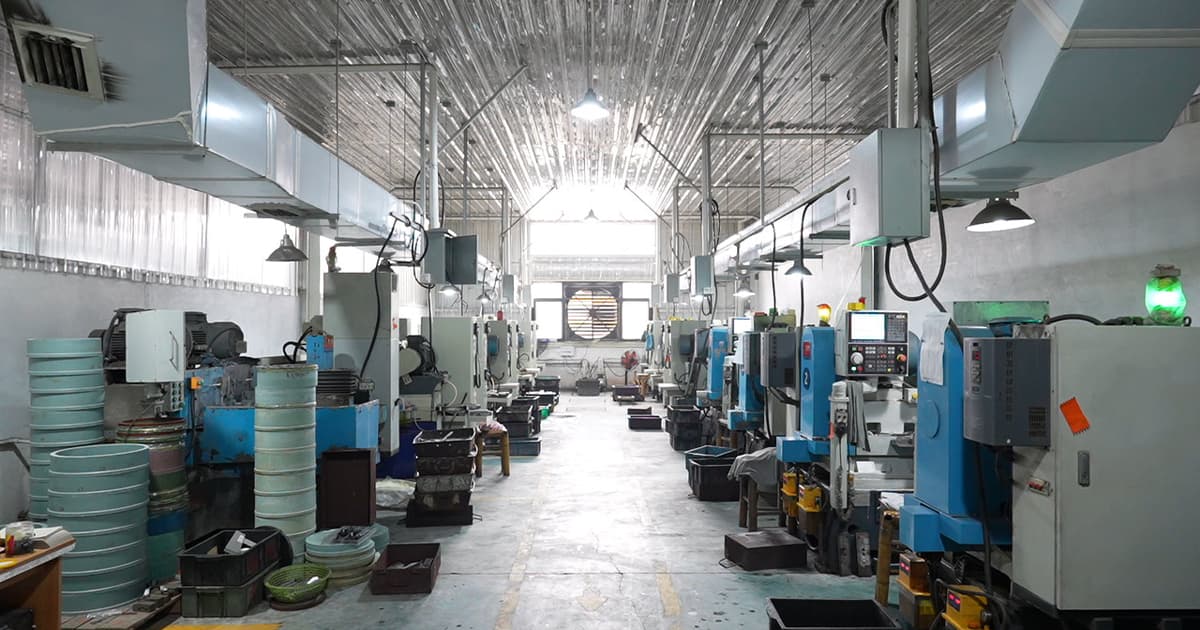
Jun 9, 2026
How to Choose a Reliable Kitchenware Manufacturer in China
Learn how to choose a reliable kitchenware manufacturer in China with our 7-step 2026 guide. Avoid costly defects, verify LFGB/FDA certifications, negotiate low MOQs, and get a free supplier checklist.
Read more
Oct 12, 2026
304 vs 201 Stainless Steel Kitchenware: A Buyer’s Guide
Choosing between 304 and 201 stainless steel affects corrosion resistance, product lifespan, compliance, and cost. This buyer’s guide explains where each grade fits, how to verify materials, and what to include in an OEM kitchenware specification.
Read moreRelated Products
View all products