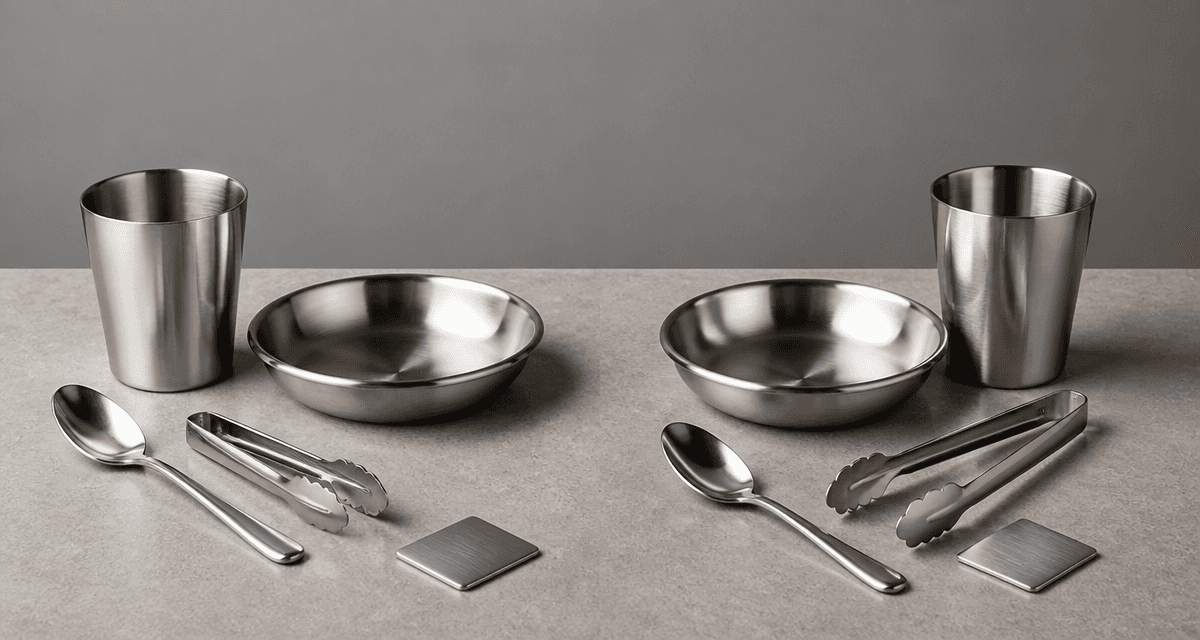
October 12, 2026
304 vs 201 Stainless Steel Kitchenware: A Buyer’s Guide
By Kay Chan|11 min read
Choosing between 304 and 201 stainless steel affects corrosion resistance, product lifespan, compliance, and cost. This buyer’s guide explains where each grade fits, how to verify materials, and what to include in an OEM kitchenware specification.
For importers, distributors, hospitality suppliers, and private-label brands, choosing between 304 and 201 stainless steel is not simply a question of which grade costs less. It is a question of where the product will be used, what it will contact, how it will be cleaned, and what evidence the supplier can provide.
304 stainless steel is usually the safer default for repeated food contact, acidic beverages, wet service, and products expected to maintain their finish over a long service life. Grade 201 can be appropriate for cost-sensitive kitchenware used in moderate environments, but buyers should define the application and verification requirements before approving it.
This guide compares both grades from a procurement perspective and shows what to put in an OEM specification so the material you approve is the material you receive.
304 vs 201 Stainless Steel: Quick Comparison
The main commercial trade-off is straightforward: 304 prioritizes broader corrosion resistance and versatility, while 201 reduces nickel content and is intended for more moderate corrosive conditions.
Buying criterion | 304 stainless steel | 201 stainless steel |
|---|---|---|
Standard identifiers | UNS S30400; EN 1.4301; SUS 304 | UNS S20100; EN 1.4372; ASTM 201 |
Chromium specification | 17.5–19.5% | 16.0–18.0% |
Nickel specification | 8.0–10.5% | 3.5–5.5% |
Manganese specification | Up to 2.0% | 5.5–7.5% |
Corrosion positioning | Broad general-purpose use across many environments | Moderate corrosive applications |
Forming and welding | Excellent general forming and welding characteristics | Formable austenitic grade; production behavior must be matched to the product design |
Typical kitchenware fit | Drinkware, barware, sinks, hollowware, food equipment, repeated wet use | Selected kitchenware and catering products in controlled, moderate conditions |
Procurement default | Preferred when durability and corrosion resistance are priorities | Consider when application risk is lower and cost pressure is higher |
Composition values and grade identifiers above are drawn from the World Stainless grade datasheets for 304 and the Bahru Stainless 201 technical brochure. These ranges describe material specifications; they do not replace testing of the finished product.
What Is the Difference Between 304 and 201 Stainless Steel?
The most important difference for buyers is alloy balance. Both are austenitic stainless steels, but 201 uses more manganese and less nickel than 304.
The World Stainless datasheet describes 304 as the standard “18/8” grade and one of the most versatile and widely used stainless steels. Its specification lists 17.5–19.5% chromium and 8.0–10.5% nickel. The Bahru Stainless datasheet lists 201 with 16.0–18.0% chromium, 3.5–5.5% nickel, and 5.5–7.5% manganese.
That difference affects how buyers should position the material. The 201 datasheet identifies the grade as an alternative to 304 for moderate corrosive applications. By contrast, the 304 datasheet describes very good resistance across a wide range of atmospheric environments and many corrosive media.
In practical sourcing terms, this means a buyer should not approve “stainless steel” as a complete material description. The RFQ and purchase specification should name the exact grade and the service conditions the finished item must withstand.
Which Grade Has Better Corrosion Resistance?
304 is the better default when corrosion resistance is the deciding factor. This is especially relevant for products exposed repeatedly to water, acidic ingredients, beverage residues, cleaning chemicals, or humid storage.
The 304 grade sheet identifies food processing, beverage production, sinks, kitchen benches, equipment, and appliances among its typical applications. It also notes that 304 may still be susceptible to pitting and crevice corrosion in warm chloride environments. In other words, 304 is versatile, not indestructible.
Grade 201 is positioned for moderate corrosive environments. That can be sufficient for carefully selected products, but the buyer should examine the full use pattern:
- Will the item remain wet after washing?
- Will it contact citrus, vinegar, wine, salt, or cocktail ingredients?
- Will it be used near a coast or stored in a humid warehouse?
- Will the surface be plated or coated?
- Will the user clean it in a dishwasher or with aggressive chemicals?
A dry accessory used occasionally presents a different risk from a cocktail mug holding acidic drinks throughout daily service. Material selection should follow the harsher of the expected use and cleaning conditions.
Is 304 Always the Better Choice for Kitchenware?
No. The correct choice depends on product function, target price, expected lifetime, and market requirements. Choosing 304 for every component can add unnecessary cost, while choosing 201 solely to reduce the quote can create durability or claim risk.
Use 304 when the product has demanding contact conditions
304 is the stronger starting point for drinkware, barware, hollowware, graters, wet-use tools, and products positioned for repeated professional service. It is also easier to justify when buyers need a consistent premium-material story across a private-label collection.
Unipeo currently specifies 304 stainless steel on products such as its 500ml hammered Moscow Mule mug, 18oz hammered metal wine goblet, and handheld cheese grater. These examples show why the same grade may be selected for different reasons: beverage contact, repeated hospitality use, or a working food-preparation surface.
Consider 201 when conditions are moderate and the specification is controlled
201 may suit selected indoor kitchenware or catering applications where exposure is moderate, the surface is cleaned and dried correctly, and the product is not being sold with an unsupported 304 claim.
The decision should be intentional. Ask the manufacturer to explain which component uses 201, why it is suitable, what finish will be applied, and what test plan supports the intended market and use case.
Consider another grade when neither 304 nor 201 fits
For severe chloride exposure or specialized service, a different grade may be more appropriate. Material choice should be reviewed against the actual environment rather than reduced to a two-grade comparison.
Does “Food Grade Stainless Steel” Mean 304?
Not automatically. “Food grade” is an application and compliance claim, not a visual description or a synonym for one alloy number.
For the European market, the European Commission states that kitchenware and tableware are food contact materials. All food contact materials placed on the EU market must comply with Regulation (EC) No 1935/2004 and must be manufactured in accordance with Good Manufacturing Practices under Regulation (EC) No 2023/2006. The framework requires materials not to release constituents into food at levels harmful to health or change food composition, taste, or odor unacceptably.
The same European Commission guidance also notes that material-specific rules may include national provisions where no harmonized EU measure exists. That matters for metal kitchenware: an importer should confirm the destination market, product category, contact conditions, and supporting documentation instead of relying on a generic “EU compliant” statement.
A buyer therefore needs to evaluate:
- the material specification;
- all food-contact surfaces and joined components;
- coatings, plating, paints, adhesives, plastics, and packaging where relevant;
- intended food types, contact time, and temperature;
- manufacturing and quality-control records;
- the applicable rules and test methods for the destination market.
A certificate logo on a sales page is not a substitute for a product-specific test report that matches the material, construction, and intended use of the item being purchased.
How Can Buyers Verify 304 vs 201 Before Production?
Use a layered verification process: supplier declaration, traceable material documents, and risk-based testing. No single quick check is sufficient for every order.
1. Put the exact grade in the RFQ and purchase order
Avoid descriptions such as “premium stainless steel” or “food-grade metal.” Write the required designation, such as SUS 304, UNS S30400, or another agreed standard identifier. If a product contains more than one metal component, specify each component separately.
2. Request traceable material documentation
Ask for a mill test certificate or material certificate tied to the supplied batch. Review the heat or batch reference, grade designation, chemical composition, supplier identity, and document date. The certificate should connect logically to incoming material records and the production lot.
3. Use positive material identification when the risk justifies it
For higher-value orders, mixed-material products, or suppliers with limited traceability, arrange positive material identification through an appropriate laboratory or inspection provider. The test method and sampling plan should be chosen for the actual product and risk.
4. Test the finished article, not only raw sheet
The finished product may include welds, solder, handles, coatings, plating, plastics, or adhesives. A correct base sheet does not prove that every food-contact surface or assembly is compliant.
5. Retain an approved sample and production records
Approve a signed reference sample before mass production and define how production units will be compared against it. Keep the material certificate, inspection report, test report, packaging approval, and change-control record together.
Buyer note: Appearance is not proof of grade. Surface finish, polishing, plating, and lighting can make different alloys look similar. A magnet response can also be affected by composition and cold working, so it should not be used as the sole acceptance test.
Why Finish and Manufacturing Quality Matter as Much as Grade
A good alloy can still become a poor product if forming, welding, polishing, cleaning, or plating is badly controlled. Buyers should evaluate material grade and production quality as one system.
Surface condition
Scratches, embedded contamination, rough welds, and poorly finished crevices can retain moisture and cleaning residues. These defects may reduce cleanability or become corrosion initiation points even when the specified base material is correct.
Welding and joined components
The 304 datasheet highlights the grade's strong weldability, but the finished joint still depends on the chosen method, filler, heat control, and post-process cleaning. For a mug, utensil, or hollowware product, ask how handles and seams are joined and inspected.
Plating and decorative finishes
Gold, copper, rose-gold, or black finishes add another performance layer. Define color standard, adhesion expectations, contact area, cleaning instructions, and approved test method. Do not assume a 304 substrate makes every decorative coating dishwasher-safe.
Mixed-material construction
A product described as “304 stainless steel” may include a different grade in a non-contact component, a plastic handle, or another joining material. Your specification should state whether the 304 requirement applies to the entire product or only named components.
What Should an OEM Material Specification Include?
A strong OEM specification makes the acceptance criteria measurable before tooling or production begins. At minimum, include the following:
- Product name, drawing revision, and SKU reference
- Stainless steel grade and recognized designation
- Component-by-component material map
- Sheet or wire thickness with tolerance
- Surface finish, polish level, texture, or plating requirement
- Food-contact surfaces and intended food or beverage use
- Use temperature, contact time, cleaning method, and storage environment
- Destination market and required compliance documentation
- Required certificate or test-report scope
- Sampling and inspection plan
- Workmanship limits for scratches, pits, welds, sharp edges, and finish variation
- Approved sample and change-control procedure
- Packaging method that protects the finish in transit
If you are still defining the product, compare OEM and ODM kitchenware models before deciding how much of the specification will come from your team and how much will come from the manufacturer's existing design.
Common Sourcing Mistakes to Avoid
Approving “stainless steel” without a grade
This leaves room for different interpretations between quotation, sample, and mass production. State the grade and component scope in writing.
Treating the cheapest material as the lowest total cost
A lower unit price can be offset by surface complaints, replacement demand, testing failures, or a shorter product life. Compare total commercial risk, not just the FOB line item.
Assuming 304 is automatically compliant everywhere
304 is a material grade, not a universal market approval. Finished-article construction and destination-market requirements still need review.
Relying on one quick field test
Appearance, spark tests, chemical spot tests, and magnets each have limitations. Use appropriate methods, controlled sampling, and qualified testing where needed.
Ignoring finish-care instructions
Mirror polish, electroplating, and colored coatings may require different cleaning instructions from bare stainless steel. Align product claims, test conditions, and care labels.
Frequently Asked Questions
Is 201 stainless steel safe for kitchenware?
It can be used in kitchenware and catering applications, but suitability depends on the product, contact conditions, manufacturing quality, and destination-market requirements. Buyers should not approve it solely because the base alloy is called stainless steel.
Is 304 stainless steel rust-proof?
No stainless steel is completely immune to corrosion. The 304 grade sheet notes susceptibility to pitting and crevice corrosion in warm chloride environments. Correct design, cleaning, drying, and environment remain important.
Can a magnet distinguish 201 from 304?
Not reliably as a stand-alone acceptance test. Both are austenitic grades, and cold working can change magnetic response. Use traceable documents and an appropriate material-identification method for a purchasing decision.
Is 18/8 stainless steel the same as 304?
The World Stainless datasheet describes grade 304 as the standard “18/8” stainless steel. For procurement, however, use a recognized grade designation and specification rather than only the informal 18/8 description.
What documents should I ask a kitchenware manufacturer for?
Request material documentation tied to the production batch, product-specific test reports relevant to the destination market and intended use, inspection records, and an approved sample. The exact package should reflect the product's material mix and risk level.
Final Recommendation
For most B2B kitchenware projects involving repeated food or beverage contact, wet service, or a premium durability position, 304 is the more defensible default. Grade 201 remains a valid engineering and commercial option for selected moderate-use applications when the buyer controls the specification, verifies the material, and aligns claims with evidence.
The best purchasing decision is not “304 at any cost” or “201 to save money.” It is a documented match between alloy, product design, service conditions, manufacturing process, compliance obligations, and target price.
Planning a stainless steel kitchenware line? Review Unipeo's product catalog, use the China kitchenware sourcing guide to structure your procurement process, or send your target material, quantity, finish, packaging, and destination market for an OEM/ODM quotation.
Sources
Share this article
Help others discover this insight.
Related Reading
View all articles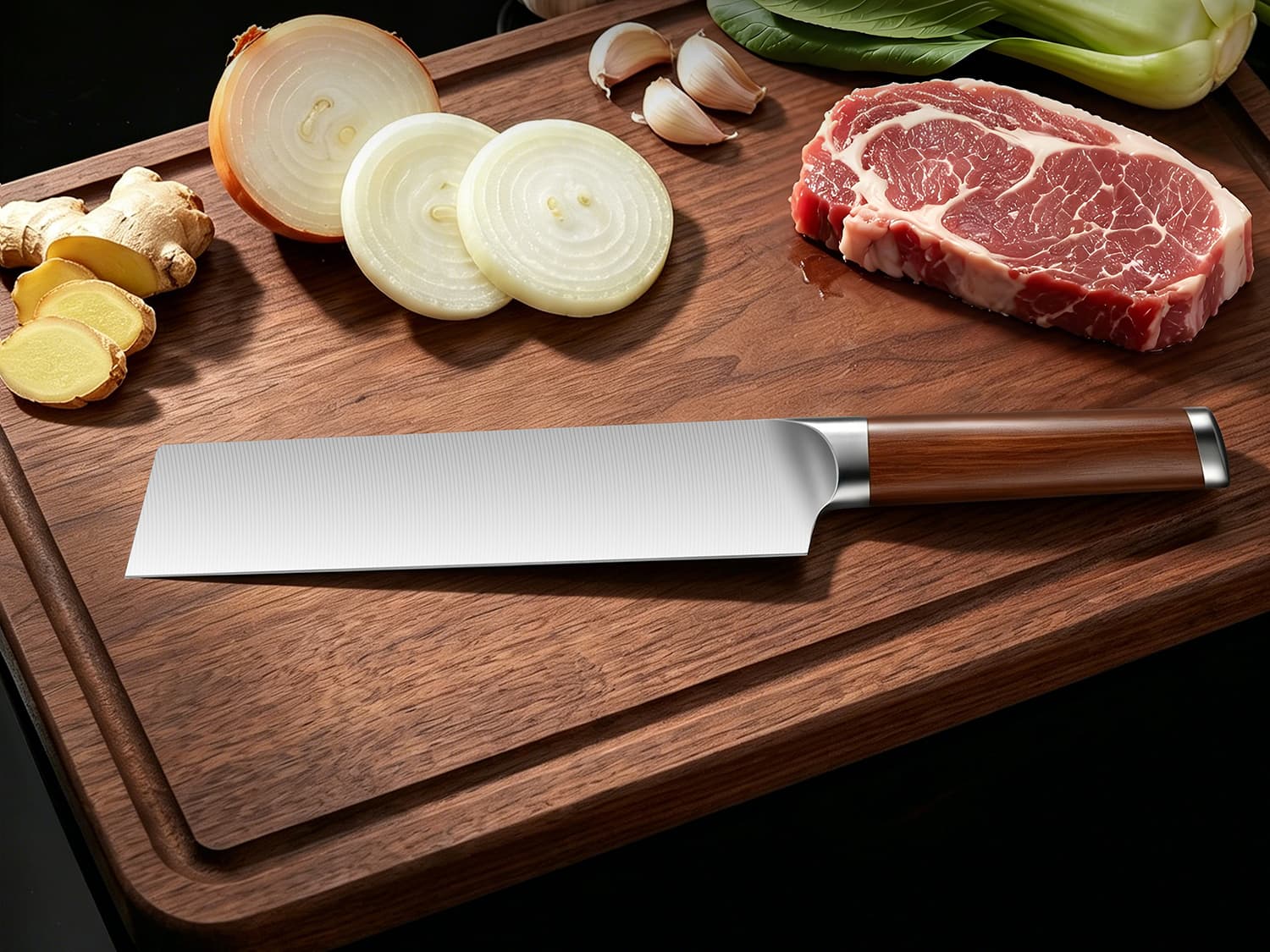
Jun 20, 2026
The 2026 Kitchenware Trend: Why Nakiri Knives are the Next High-Margin Bestseller for Amazon Sellers
Expand your product catalog with the trending Nakiri knife. Discover why professional buyers and Amazon sellers are prioritizing this Japanese-style vegetable specialist for high-profit margins, premium OEM potential, and commercial-grade durability. Learn how to leverage this specialized SKU to differentiate your kitchenware brand in a crowded market.
Read more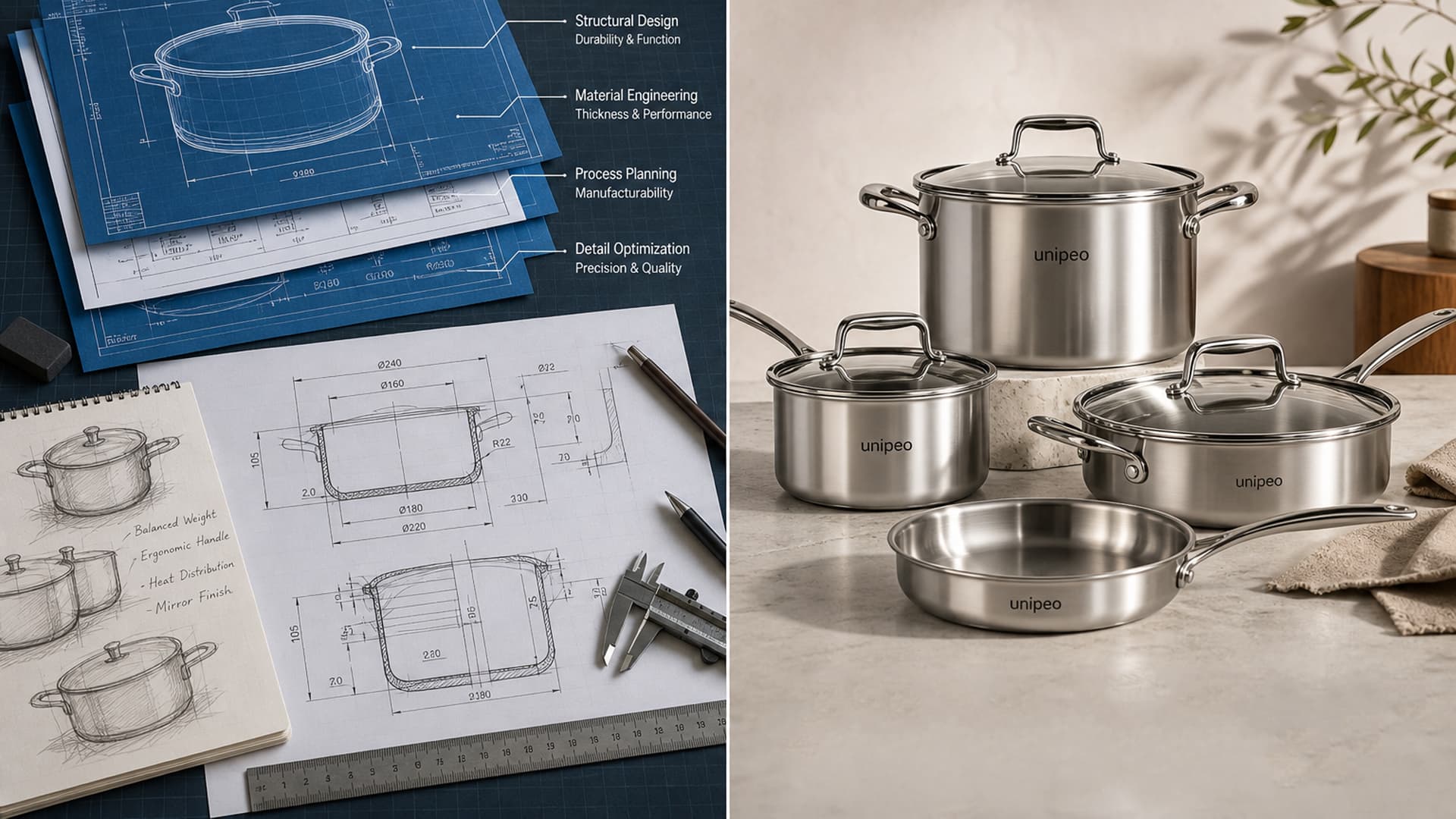
Sep 17, 2026
OEM vs. ODM Kitchenware: What's the Difference?
Launching or expanding a kitchenware brand involves more than choosing the right products. One of the most important decisions you'll make is choosing the right manufacturing model. Two terms you'll encounter frequently are OEM (Original Equipment Manufacturer) and ODM (Original Design Manufacturer). Although they sound similar, they offer very different approaches to product development, customization, investment, and branding.
Read more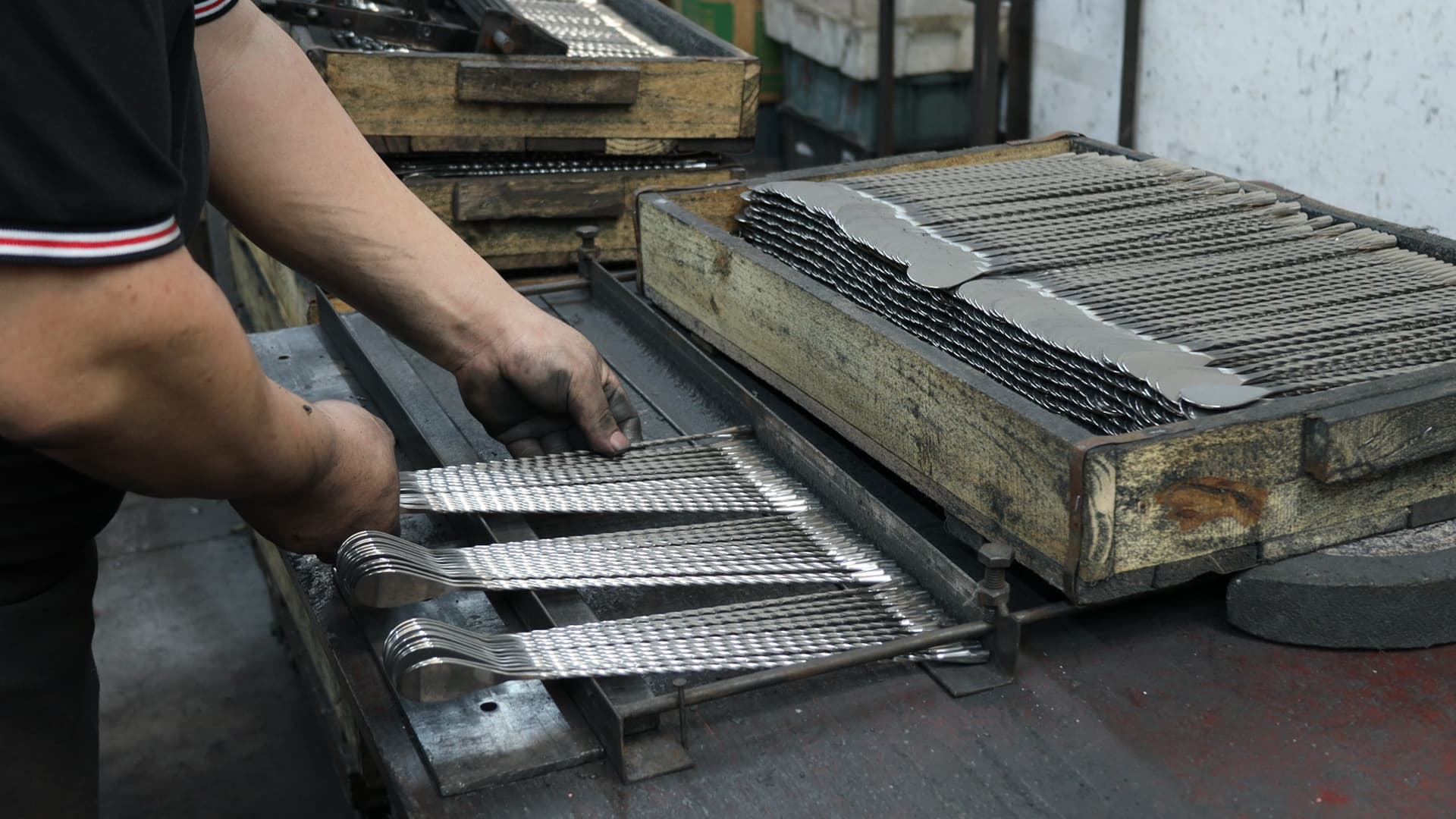
Sep 17, 2026
Factory-Direct vs. Trading Company: Which Is Better for Kitchenware Buyers?
When sourcing kitchenware for your business, one of the first decisions you'll face is whether to buy directly from a manufacturer or work through a trading company. While both options can help you source products, they differ significantly in pricing, customization, quality control, communication, and long-term value.
Read moreRelated Products
View all products